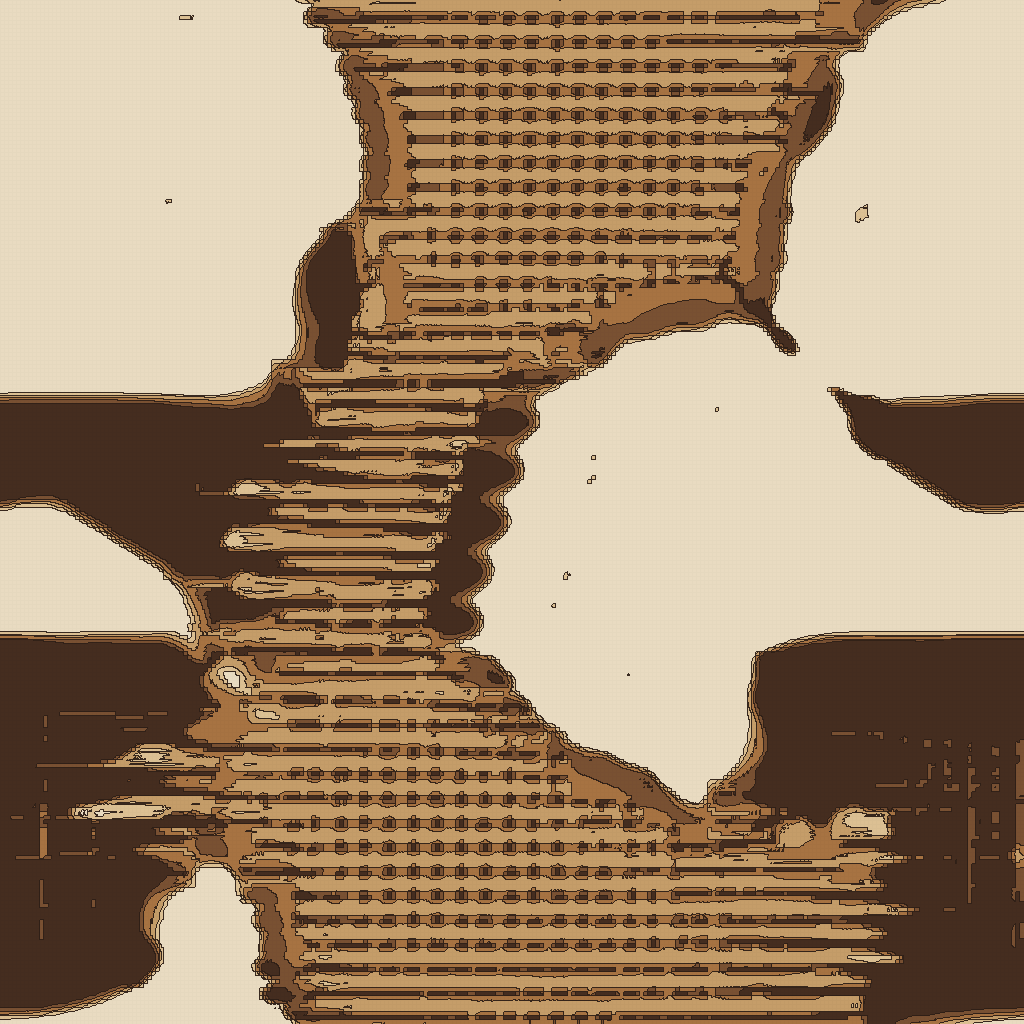
Near shows a magnified central detail sourced from the canonical 1024 px rendering.「近」は正規1024pxレンダリングに基づく中央部の拡大表示です。
Unwoven Territory 《Unwoven Territory|ほどかれた領土》
Tatsuya Minegishi · Long-form generative system, 2026 嶺岸達矢 · ロングフォーム生成システム、2026年
Weaving usually fills a surface. In Unwoven Territory, the opposite occurs: as the weave develops, open territory emerges.
織ることは、通常、面を満たす行為です。《Unwoven Territory|ほどかれた領土》では逆のことが起こります。織りが進むほど、ほどかれた領土が現れるのです。
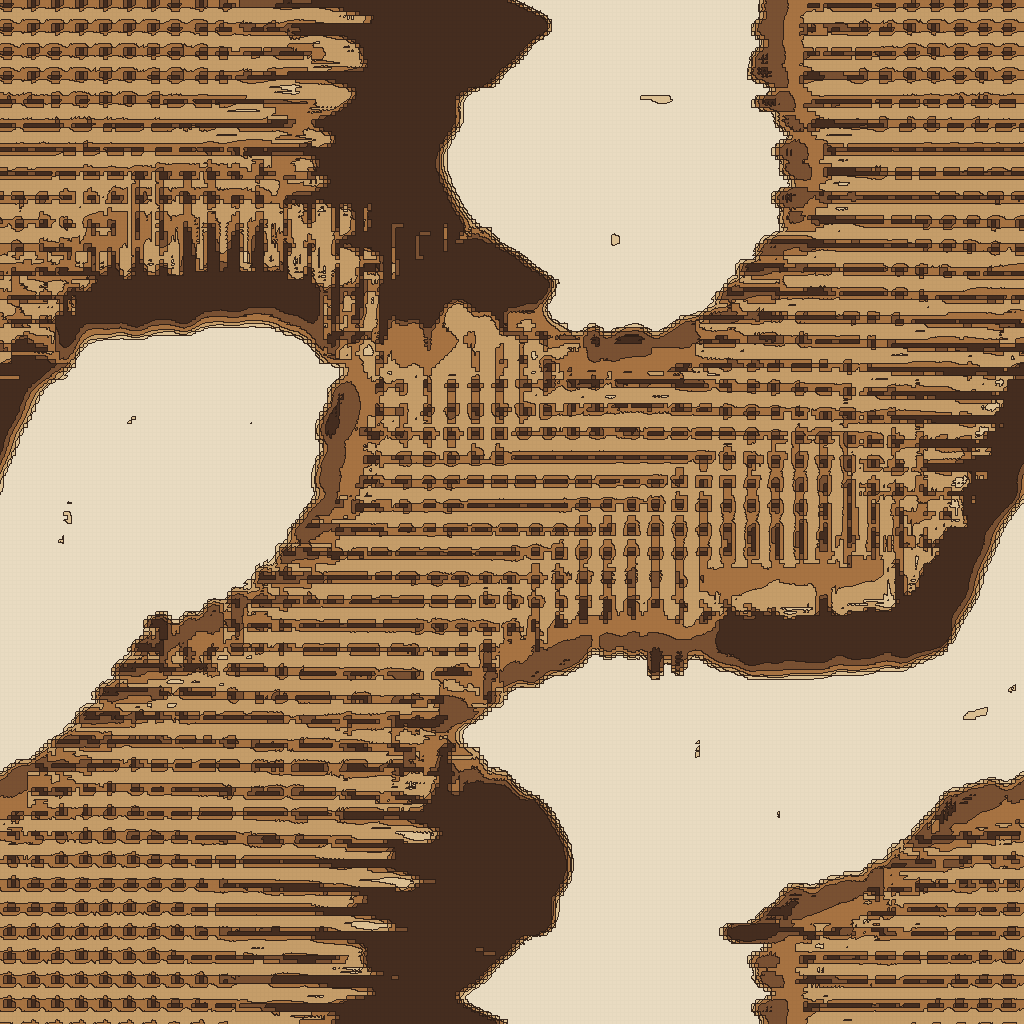
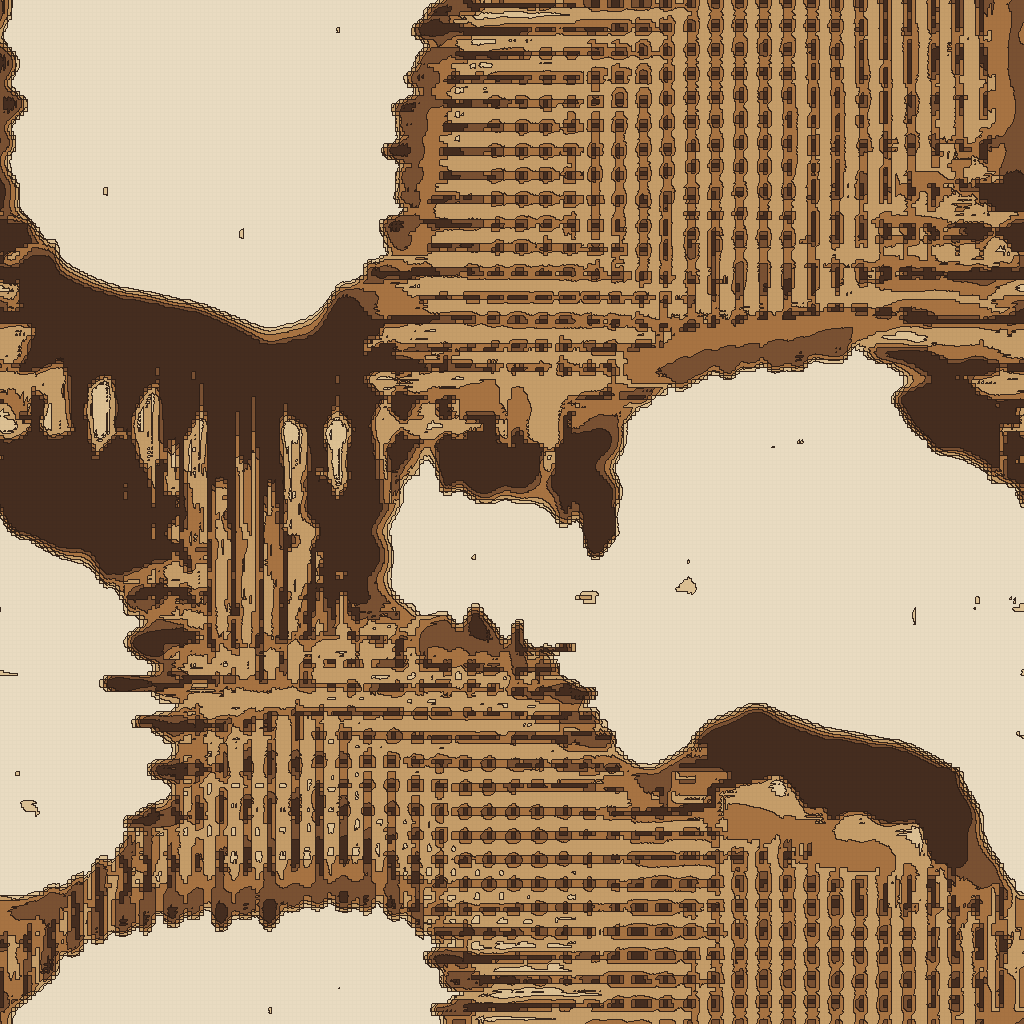
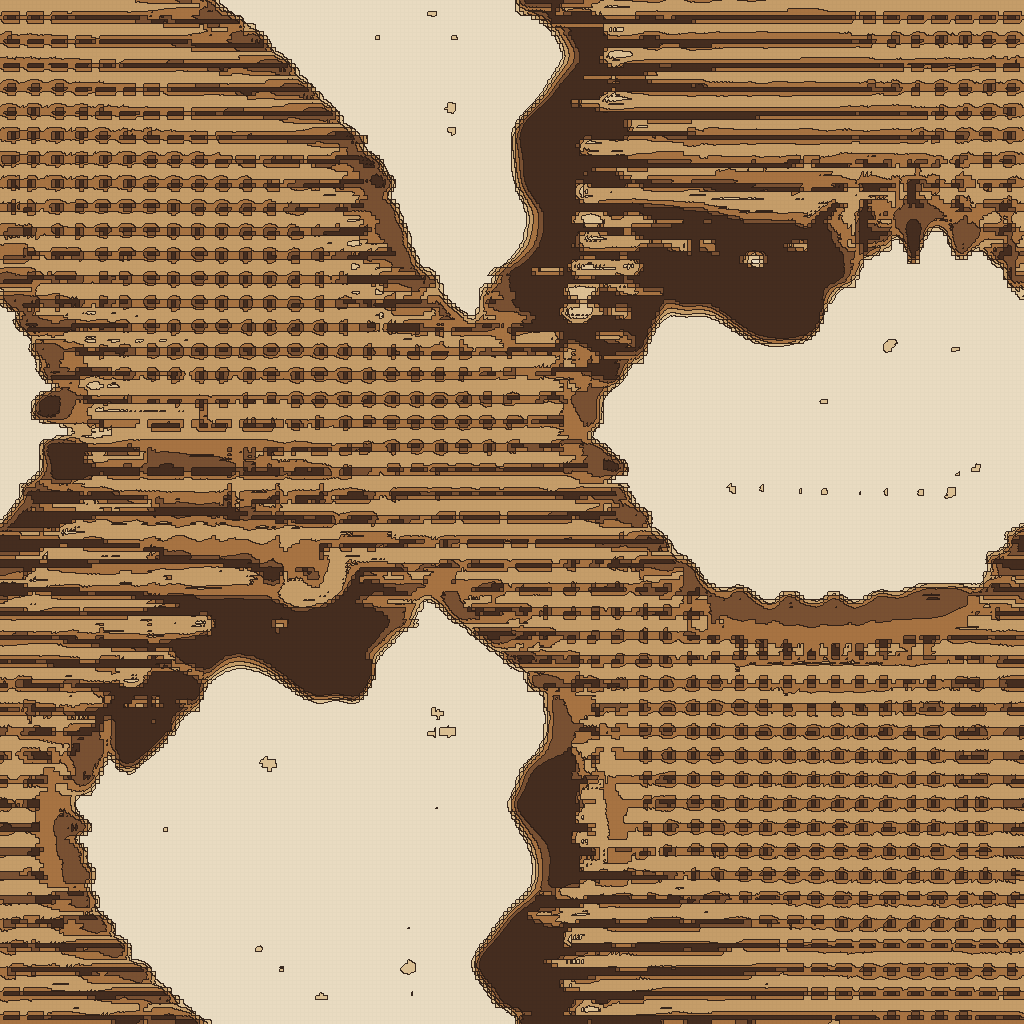
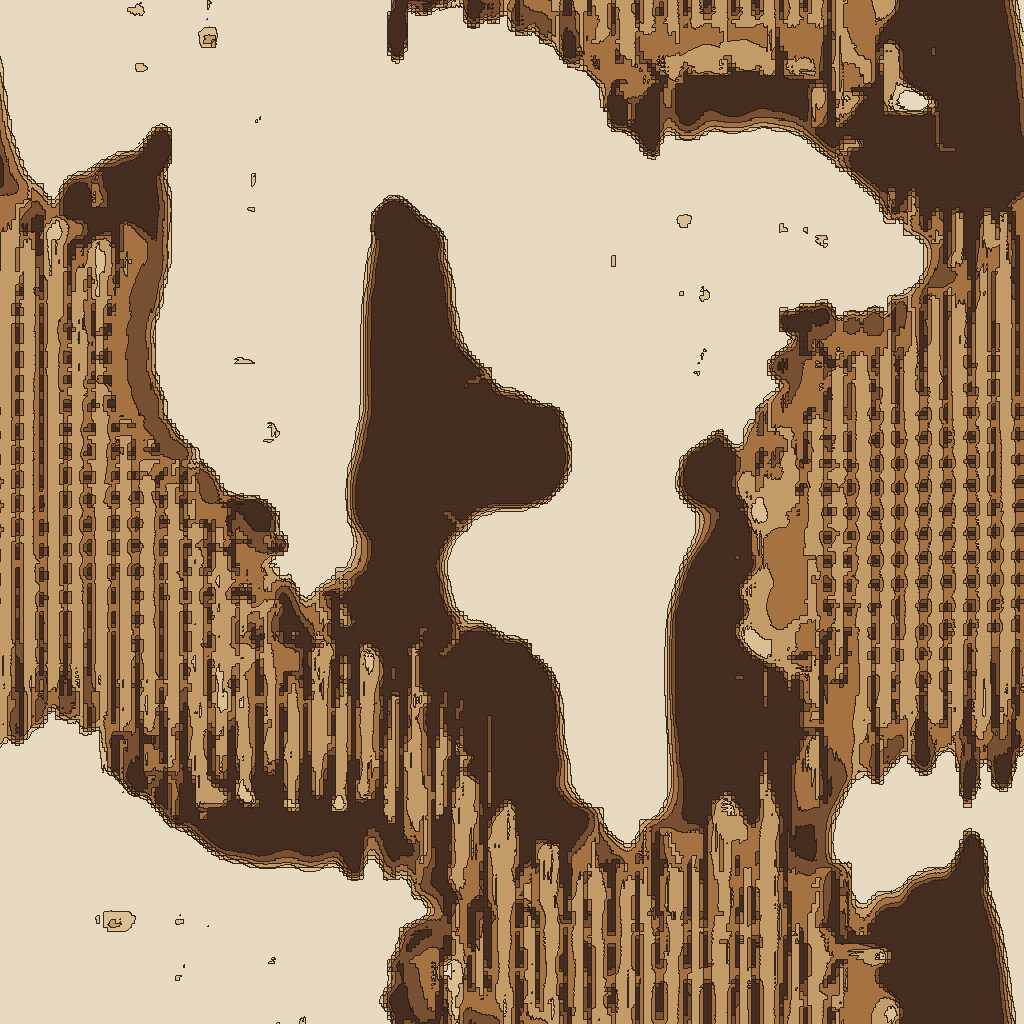
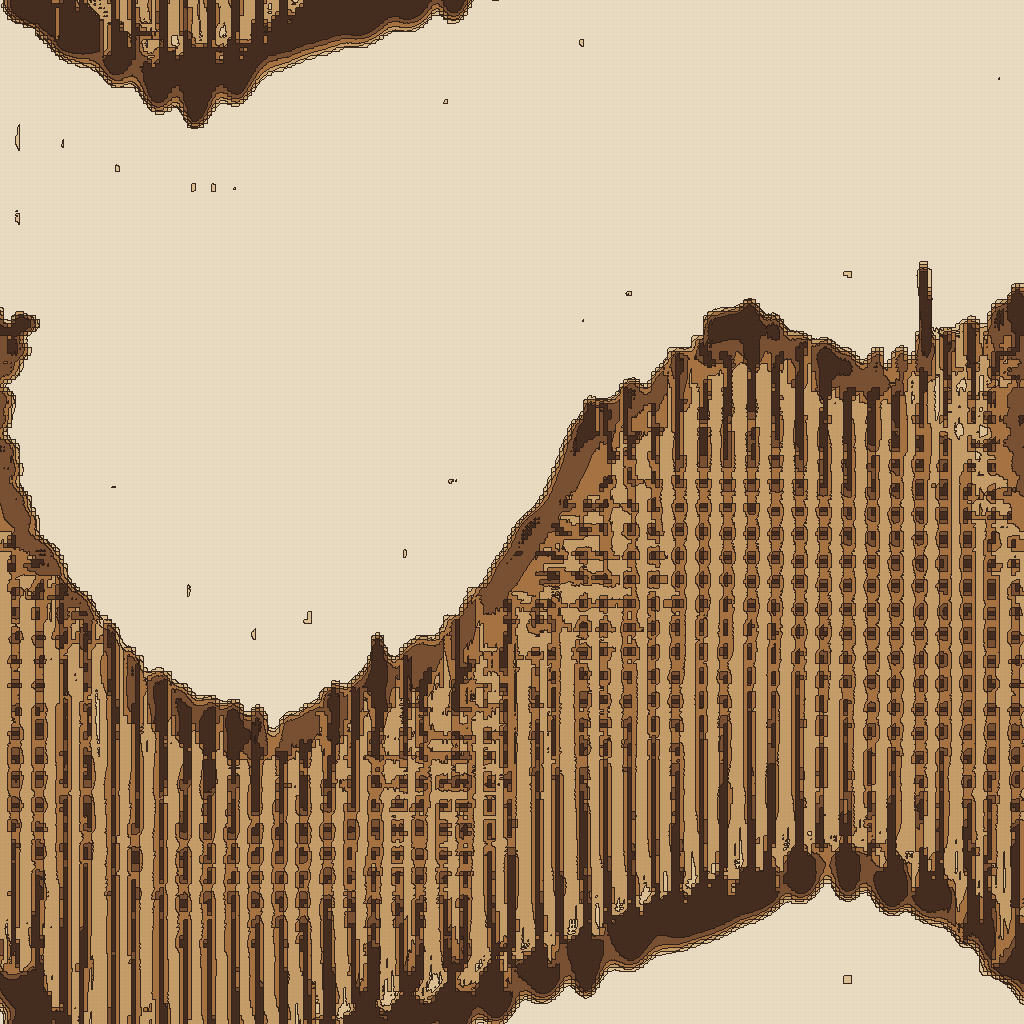
Six outputs from the series, selected to show the formal range of the law.法則の造形的な幅を示すために選んだ、シリーズからの六つの出力。
Artist statementアーティスト・ステートメント
Weaving usually fills a surface. In Unwoven Territory, the opposite occurs: as the weave develops, open territory emerges.
Two fields evolve on a fixed 256 × 256 lattice under the same four interactions. Each output begins from different initial conditions; the governing law remains sealed across the entire series. Dense orthogonal structures gradually recede, exposing smooth regions that are neither background nor absence. They are territories relinquished by the weave.
The finished images may suggest maps, textiles, or circuitry, but none of these forms is directly drawn. Each work is a record of a lattice giving up space over time, forming a boundary between what remains woven and what is left open.
The lattice is never fully hidden, even at print resolution. Seen near, traces of the cells remain; seen far, continental openings stand up out of the weave. The work is a process in which law, time, and territory form one another.
織ることは、通常、面を満たす行為です。この作品では、織りが進むほど空白が現れます。私はその空白を背景ではなく、作品の主体である領土として扱っています。
256×256の固定格子の上に二つの場を置き、同じ四つの相互作用を反復します。初期には画面を埋める織機や回路のような密度があります。時間が進むにつれ、その構造の一部が退き、滑らかな空白が現れます。
各出力は異なる初期条件から始まりますが、法則そのものは全作品を通じて封印されたまま変わりません。そのため各出力は同じ世界に属しながら、どこが織られ、どこが明け渡されるかについて異なる履歴を持ちます。
完成像は地図にも、布にも、回路にも見えますが、いずれかを模写したものではありません。格子は高解像度化の際にも完全には隠れず、近くで見るとセルの痕跡が残り、遠くから見ると大陸状の空白が立ち上がります。作品は、規則、時間、領土の三者が互いを形成する過程です。
One hash, five moments一つのハッシュ、五つの時間
The five stages below are the same output — #244, a single hash — stopped at five moments of its formation: t = 40, 69, 138, 206, 275. Early, the conditions register as dense weave; later, the weave withdraws and territory forms. The final stage is the finished image.
以下の五段階は、同じ出力――単一のハッシュによる #244――の形成過程を、t = 40 / 69 / 138 / 206 / 275 の五つの時点で止めたものです。初期には条件が密な織りとして現れ、やがて織りが退いて領土が形成されます。最終段階が完成像です。
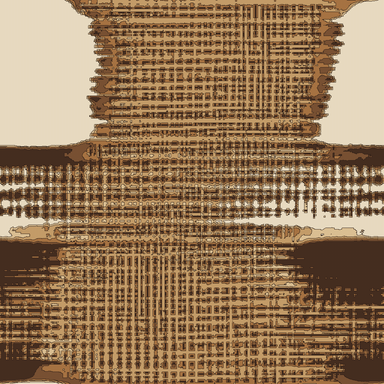
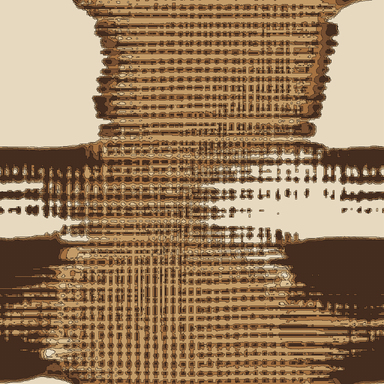
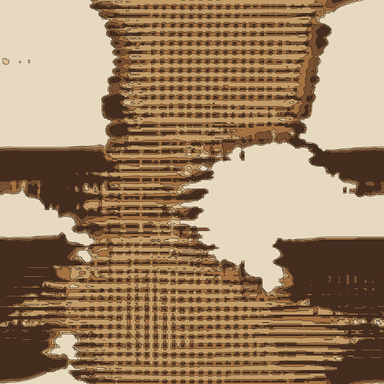
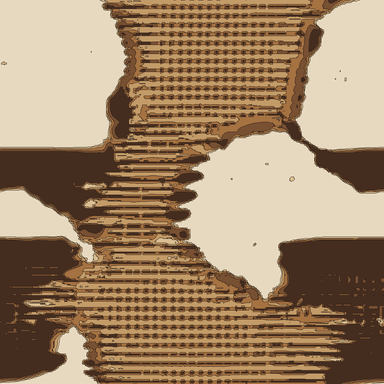
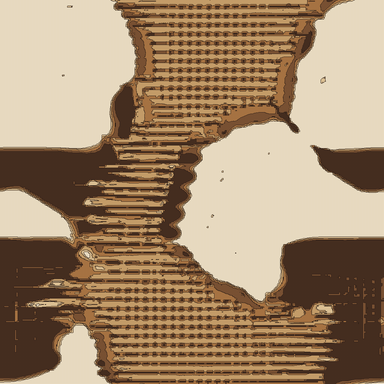
All five stages derive from the same hash. The final stage is the finished image. 五つの段階はすべて同じハッシュに由来します。最終段階が完成像です。
One law, different beginnings一つの法則、異なる始まり
Every output in the series is produced by the same fixed rule — the same four interactions, the same palette, the same duration. What changes between outputs is only the starting condition: where the two fields begin. From those different beginnings, the one law produces different territories. Nothing is composed by hand, and the law is never adjusted for an individual image.
シリーズのすべての出力は、同じ固定された規則――同じ四つの相互作用、同じ配色、同じ時間――から生成されます。出力ごとに変わるのは、二つの場がどこから始まるかという初期条件だけです。異なる始まりに同じ法則が作用することで、異なる領土が生まれます。手で構図を描くことはなく、個々の画像のために法則を調整することもありません。
The six images above are editorial selections: they were chosen to explain the formal range of the law, not as a statistical sample and not as a list of preferred or allowlisted outputs. Unselected outputs are equally valid works of the same law.
上の六点は編集的な選択です。法則の造形的な幅を説明するために選んだものであり、統計的な標本でも、望ましい出力を列挙した許可リストでもありません。選ばれなかった出力も、同じ法則の等しく正当な作品です。
Evidence & validation検証資料 — Unselected walls, ablations, and determinism notes for close review. — 無選別の壁面、作用の除去実験、決定性に関する記録。
Run the work作品を実行する
The work is a deterministic program. Running it here regenerates output #244 from its hash, live, under the sealed law. Nothing is loaded until you choose to run it.
この作品は決定論的なプログラムです。ここで実行すると、封印された法則のもとで、出力 #244 がそのハッシュからその場で再生成されます。実行を選ぶまで、プログラムは読み込まれません。
Generating — the field is being formed…生成中 — 場を形成しています…
The live work could not be started in this browser. The still image above is the canonical rendering.このブラウザではライブ実行を開始できませんでした。上の静止画が正規のレンダリングです。
Clicking the canvas replays the formation of this same output. It does not generate a new image.キャンバスをクリックすると、同じ出力の形成過程が再生されます。新しい画像が生成されるわけではありません。